
Every Soup Kitchen and Food Bank in the Brampton Area
Throughout years of service to the community, we know what every person deserves: nutritious food, sufficient clothing, and warm shelter. These necessities are vital for getting people back on their feet, but many Canadians lack access to them.
Community is powerful, and many organizations across the Peel region help provide essential care to vulnerable Canadians.
Many soup kitchens are available in the Brampton area, including Knights Table, St. Paul’s United Church, St. Andrew’s Presbyterian Church, and Meals on Wheels.
Home-Cooked Meals Aren’t Always Available
Many people can expect a warm dinner at the end of the day. Unfortunately, this isn’t the case for everyone—over 20,000 Canadians experience homelessness.
These statistics aren’t limited to major cities nationwide—many are your neighbours. According to the Homeless Hub, as of 2021, hundreds of individuals in the Peel region are experiencing homelessness. The vulnerable people in your community (and across the country) deserve a place to rest with a hot meal.
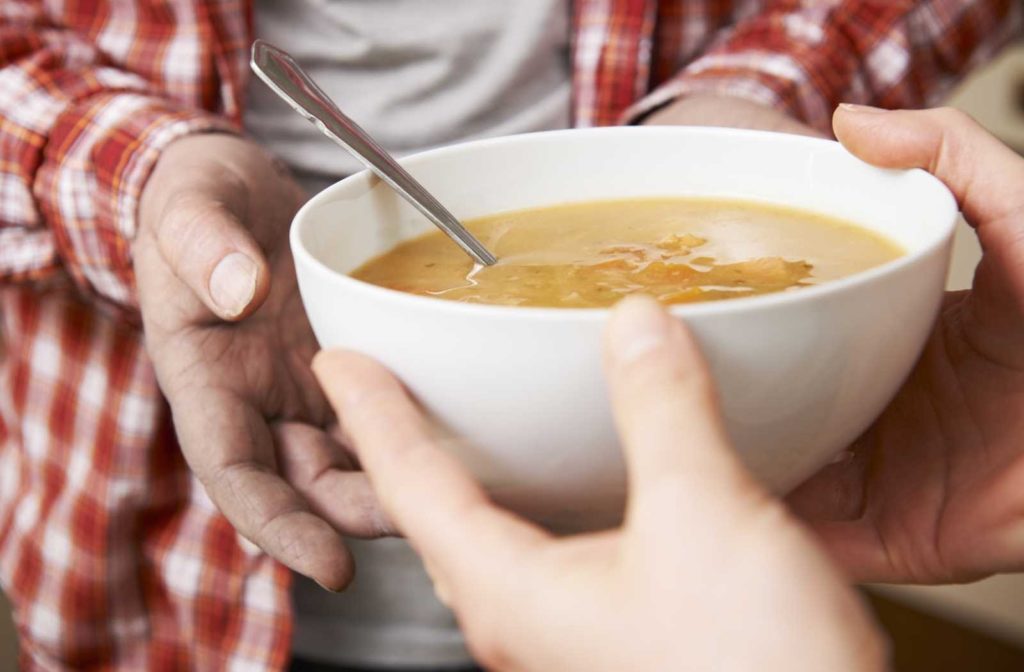
Soup kitchens give people a sense of hospitality in trying times. With limited access to food and shelter, someone shouldn’t have to make difficult decisions. A meal in a warm space can make a difference in someone’s day or week.
Whether you’re looking for a meal or a place to volunteer, we have curated a list of available soup kitchens in the Brampton area.
Regeneration Outreach Community
We offer several services through our essential care program. You can count on us for warm meals for breakfast every day of the year and lunch during weekday afternoons.
Our community care page features up-to-date info on meals and other services. We offer holistic care for our visitors, ranging from spiritual to physical needs. We’re here to help our neighbours, providing food, clothes, showers, haircuts, and more.
Contact us today if you need a hand.
Knight’s Table
Knight’s Table has several food programs to support the Brampton community, from its breakfast program to its seniors café. They believe in providing good food for everyone, regardless of where they come from and where they’re going.
Their soup kitchen operates at varying hours during weekdays and weekends, closing between 4 and 6 PM. Everyone is welcome for a warm meal.
Contact Knight’s Table at:
905-454-8725
287 Glidden Road, Unit #4
Brampton ON, L6W 1H9
St. Paul’s United Church
St. Paul’s United Church has an established reputation as a Brampton soup kitchen. Their food cupboard service helps provide non-perishables to low-income community members.
You can contact or visit St. Paul’s United Church at:
stpaulsoffice@on.aibn.com
905-451-1405
30 Main Street South
Brampton, Ontario, L6W 2C4
St. Andrew’s Presbyterian Church Brampton
St. Andrew’s Presbyterian Church operates a food bank for in-need Canadians. Volunteers work in the food bank to prepare items, with everything available for grabs at noon. Stop by if you need a hand and help yourself with anything from canned goods to bread and produce.
For food bank information, contact them at:
foodbank@standrewsbrampton.ca
905-451-1723
44 Church Street East, Brampton
Ontario Canada, L6V 1G3
Brampton Meals on Wheels
Meals on Wheels is ready-to-serve, hot, balanced meals FOR those in need, crafted by certified cooks and a registered dietician. With decades of experience, Meals on Wheels runs seasonal fresh and frozen food programs for low-income or at-risk Canadians.
The organization’s services are usually reserved for:
Individuals with chronic illness
Individuals recovering from illness or surgery
Canadian Veterans
Individuals living with a physical or mental disability or undergoing medical treatment
Seniors who cannot travel to a grocery store to purchase food or have limited cooking skills
For information or to place a food order, call their service line:
1-905-453-4140 ext. 3720
525 Main Street North
Brampton, Ontario, L6X 1N9
It Takes a Village to Support Those in Need
These generous organizations donate their time, resources, and talent to help Canadians work toward food security. We would like to applaud our fellow organizations for the work they do.
If you’re in need or you’d like to donate or volunteer, we would love to have you. Contact Regeneration Outreach Community today.
What is the Difference Between a Bequest and a Donation?

When making charitable contributions to support your favourite nonprofits, you may have heard of “donations” and “bequests.” These are common ways to give back to your community, but you should know the difference between them.
A donation is a gift given to a charity during a person’s lifetime, while a bequest is a similar gift given to a charity from an individual’s will or estate plan. Both are excellent ways to leave a lasting impact on your community.
What Is a Bequest?
A bequest is a planned gift included in your will. The bequest can be anything valuable, such as property, stocks, or a sum of money. By making a bequest to a nonprofit, you can support the cause you believe in even after you’ve passed away.
There are 3 types of bequests:
A specific bequest is an exact monetary amount or asset left to a charity, such as a vehicle, property, or stocks.
A percentage bequest is similar to a specific one, but the amount is determined by a percentage rather than a set amount.
A residual bequest is a share of your estate left to a charity after other expenses and gifts have been handed out.
Preparing a Bequest
There are a few things to consider when arranging a bequest. Firstly, make your wishes very clear to your family or lawyer. Managing an estate after someone has passed is challenging, and clear communication helps ensure your philanthropic goals are carried out as you would hope.
Most importantly, let your chosen charity know your bequest intentions. As tempting as it may be after watching years of TV and film to leave it as a surprise, you can’t be sure a charity will be able to accept your gift if you don’t first provide them with the specifics.
While most charities can put monetary donations to good use, they may not be able to accept physical items such as artwork, real estate, or vehicles. In some cases, they may need more infrastructure than they have to put it to good use. For example, cars and homes require maintenance and management that could be beyond their means.
The Benefits of a Bequest
One of the many benefits of a bequest is that it enables you to choose how your estate is used by your family while also assisting the nonprofit. Additionally, donors have complete control over the endowment’s timing and size. Bequests are typically made by those who want to leave a lasting legacy of philanthropy in their community.
By donating to a nonprofit organization in this manner, you’re supporting its long-term mission and growth. Nonprofit organizations rely on donations and other forms of revenue to continue making a positive impact, and leaving a bequest can help them reach their goals.
What Is a Donation?
A donation is a gift of money, property, or services to a nonprofit organization. Donating to a nonprofit shows your support for their mission; it can be used to fund projects, productions, campaigns, or directly to support specific beneficiaries and their families.
A donation can be financial or non-financial. Although, for many nonprofit organizations, financial grants and assistance are essential resources to keep their operations running.
Why Donations Are Important?
Nonprofit organizations provide valuable services that benefit society, the environment, or causes that need support. In return, thousands of people volunteer tirelessly and give their resources to support nonprofits.
However, despite their resilience and unwavering enthusiasm, nonprofit organizations typically rely on support from donations from individual contributors to remain afloat. Donations are essential for nonprofits because they make up a significant share of the money they need to conduct their activities or serve their causes.
What Do Donations Support?
Donations are the lifeblood of nonprofit organizations. Without them, nonprofits wouldn’t be able to exist or make a difference in the community. When you donate to a nonprofit, you are providing financial support that goes directly towards their social mission.
These funds can be used for various purposes, such as food and shelter, educational programs, or extended healthcare services. Your donation, no matter how small, can make a real difference in the lives of those in need.
What Is the Difference?
One significant difference between donations and bequests is when the nonprofit receives the gift. Donations are typically made by living donors, whereas bequests are accepted only after the donor’s death. This means donations are often used immediately to support the nonprofit’s ongoing programs and services. However, large bequests may be used for long-term projects that will benefit the nonprofit for years.
Another difference is the level of involvement the donor has with the nonprofit. Donors may choose to become more involved with the nonprofit by volunteering or attending events. With a bequest, however, the donor’s involvement is limited to setting the terms of the gift in their will or estate plan.
Making a Difference in Your Community
Whether you choose to make a donation or a bequest, the most important thing is that you’re giving back to your community and supporting a meaningful cause. Regeneration Outreach has worked in our community for years to provide care and dignity to those in need. And we’ve always been supported by people like you.We gladly accept donations online. You can also learn more about leaving a bequest to Regeneration by reading our planned giving brochure or contacting us and asking how you can help.