

“Our Front Steps Became the Front Lines of Service:” 18 Observations From CEO, Ted Brown.

COVID-19 has been inescapable for everyone–citizens, businesses, non-profit organizations; everyone had been impacted in some way by the ever-evolving situation we’ve all found ourselves in since the beginning of 2020.
Like virtually every other type of organization, Regeneration has had to make some changes and alter the way we serve our community. 2020 and 2021 have certainly challenged us. But this unprecedented time has also provided new opportunities to support and uplift those that need us.
I’ve spent a lot of time reflecting on these challenges and opportunities, and I’ve noticed a few things, which I’d like to share with you today.
Here are 18 observations I’ve made during the COVID-19 pandemic.
1. Our Supporters Are Our Backbone
We are in awe of you, our supporters; of your generosity and your deep commitment to the people in our community.
The information, regulations, and most importantly, the need during the COVID crisis changed and expanded so quickly. But you responded to a magnificent degree. Thank you for choosing Regeneration as a channel for your compassion and action. We are humbled by that and thank God for you.
Truly, we could not do the work we do without you.
2. Community Is a Crucial Part of Our Offering
COVID really drove home the importance of community.
Almost immediately, we saw how isolation negatively impacted the folks we serve. People could no longer come in for meals and services, and as a result, the sense of community our guests rely on plummeted. Our guests grew noticeably lonelier with each month of lockdown.
3. The Need Exists Despite Restrictions
Overnight, our inside spaces were forced to close to guests. In response, staff turned our front steps into the front line of COVID response, providing good meals in takeout containers. People desperate for clothes got clothing.
Our nurse practitioner continued to volunteer, even without an indoor space, and the Bloom clinic served people from the parking lot. We were able to provide some of our guests with COVID testing here. And of course, staff had thousands of outdoor conversations offering people encouragement and advice.
4. We Must Always Have Contingency Plans
The pandemic has completely altered our appreciation for an urban food supply.
The Saturday the pandemic emergency was declared, we went into a major grocery store, only to find the shelves practically empty. This was a wake-up call for us.
There was an immediate and urgent need for essentials among underprivileged people, and we had to do something about it.
5. Our Responsibility Grows in Times of Crisis
We launched Regeneration Marketplace – the food bank – the week after the state of emergency was announced. We’d become aware of the escalating food insecurity in Brampton, and, after listening to many community leaders, we realized that we had to widen the scope of our offering.
We needed to serve everyone at risk of going hungry in Brampton, not just our Regeneration community.
6. Even Under Pressure, Our Values Shine Through
We opened the Marketplace very quickly, and while that impressed me, I was even more impressed to see Regeneration’s values assert themselves.
When we saw more than 100 people waiting in line, huddled in the cold, staff quickly switched to allocating 15-minute shopping appointments to guests. This eliminated the lineups and demonstrated the respect and dignity that Regeneration stands for, even amid an emergency.
7. Guests Lost Some Ground
As COVID rules eased and we reengaged with guests in-depth, we began to see symptoms of the damage our community members have suffered during the pandemic.
We’ve observed an obvious uptick in anxiety, prolonged isolation, and fear of health care systems. This last trend is particularly disturbing because it has encouraged our guests to neglect their urgent health needs, often saying something like, “I’m not going to a hospital and catching COVID.”
8. Agility & Speed Are Strengths of Ours
Flexibility is one of Regeneration’s strengths. In this crisis, we added speed to our list of superpowers.
When the Region of Peel needed a pandemic drop-in, we set it up. When the region asked us to hire nurses, we quickly powered through some details and new processes to get it done. In the moment, we did what we were asked to do and committed to being flexible and fast.
9. This Is the Most Challenging Landscape We Have Faced
This is not unique to Regeneration, but I have to say our staff worked an extraordinary number of hours. They have had to navigate a constantly changing landscape of rules, requirements and protocols that evolved at breakneck speed. Our team’s proactive and conscientious approach has been vital in protecting the safety of those we serve, our staff, and our volunteers.
10. The Health of Our Staff Must Be a Priority
The single biggest stressor for me was constant concern about every staff member. We were deemed essential, but we still could have closed. However, no one at Regeneration wanted to abandon our community. They were willing to risk their health to support the people who needed us.
Despite layers of precautions, a handful of staff were diagnosed with COVID. Unanswerable questions about the outcome for them and their families flooded my mind. Helpless to affect the outcome, I could only watch and pray. Thank God they recovered.
11. Burnout Will be an Ongoing Concern
When we began planning for reopening, one of our biggest challenges was exhaustion.
All of our staff at every level has experienced unprecedented stress. With a long list of questions to answer and protocols to implement, our staff really impressed me with their commitment as they pushed through. They are a real blessing, but there are definite challenges around sheer exhaustion. It is my responsibility to protect them from that.
12. Taking Stock Will Dictate Our Next Move
Senior staff are now taking a deep dive into what’s important for Regeneration. What are our next steps? What do we restart? What do we set aside? How can we make the biggest impact?
Our values are solid–no discussion there. The question is, how do we live them out as COVID recedes, and we have new insight about the needs of people in Brampton–especially those most isolated and in need of support?
13. More Funding Means More Responsibility
The funding we received during COVID is sobering. For example, a grant from the Region of Peel allowed us to provide hard-to-get essentials such as diapers. Groups like Rotary Club, churches, individual donors and businesspeople all chose Regeneration as a platform to help others.
These investments are not unique to us, nor are they new channels. However, the scale of support revealed that people and businesses trust and believe in our mission.
We are grateful and recognize that larger investments from more stakeholders demand that our systems, administration, and governance all keep pace.
14. New Priorities Have Surfaced
We do have immediate priorities. As soon as possible, we will turn the Regeneration Marketplace into a permanent high-capacity food service. We’re also taking action to find our own permanent home, larger, better suited to our work and our vision.
15. We Must Transform for the Future
We do have emerging program priorities that will take time to plan and implement. Having said that, we also have a clear vision of where we want to grow in the future.
For example, I envision more mental health support, including addiction services, and a health clinic that includes chiropractic care–incredibly beneficial to people who live hard lives and often have no home. Dental services are another great example of something we’d like to provide.
16. Our Success Relies on Partnerships
Partnerships are vital. Everything we Regeneration Outreach wants to do for isolated, neglected, and struggling people comes at a cost. It will take creative partnerships with organizations that share our passion for supporting the people that need our help.
17. We Still Face Risks
The coming months contain a lot of risks. As CEO, I have 4 key short-term responsibilities:
Restart our programs in an orderly, sustainable fashion as best we can
Support and protect staff, so no one burns out
Protect staff, guests, and volunteers from any COVID resurgence
Ensure that Regeneration Outreach has the funds we need to operate
18. Funding is Uncertain at the Moment
This is the difficult part. I am not completely confident about operational funding over the next 18 months.
Our “new normal” costs are higher, and covid-driven donations will slow down. It’s been a long haul for donors, granters, and other supporters.
Our best bet is to secure some fresh commitments. So, while we don’t presume that anyone must support us, we will make very direct appeals to people.
In Summary
This has been a challenging season. We have trusted in God to carry us through and accomplish his ends, and He certainly hasn’t let us down. So we will continue to trust Him to accomplish what He wants through Regeneration.
Meanwhile, we are thankful for every gift of any size because every dollar serves the people in Brampton who most need help.
Thank you for your interest and support.
Ted Brown, CEO
Regeneration Outreach Community
What Help Is Available for People Who Are Experiencing Homelessness?

In a single year, approximately 235,000 Canadians experience homelessness. For these people, access to social care programs and donations can be crucial to their survival. If you want to support your community and help those in need overcome homelessness, you may consider becoming a volunteer.
What Defines Homelessness?
Homelessness can be defined as the absence of adequate, permanent, or sustainable access to shelter. This also includes those who live full time in their vehicle or couch surf at family and friend’s homes. Most people experiencing homelessness do not have enough income to sustain their most basic needs. Homelessness is a systemic issue but can also be the result of poor mental and physical health, subjection to previous violence and abuse, and a shortage of affordable housing. If you want to lend some support to the homeless population in your community, you can find somewhere to volunteer or donate to as a way to help.
What Factors Lead to Homelessness?
Poverty
Unemployment
Inadequate Housing
Divorce and family disputes
Addiction to drugs and alcohol
Lack of access to education
Lack of access to social programs
Physical and violent abuse
Mental and physical trauma
Sexual trauma
What Challenges do the Homeless Face?
Identification
People experiencing homelessness lack reliable pieces of identification which can further alienate them from society and make overcoming homelessness difficult. Without identification, people experiencing homelessness cannot easily apply for jobs or social programs. Regeneration Outreach has an ID clinic that can help those without reliable pieces of identification receive a birth certificate. A birth certificate can help them apply for other forms of ID and receive other social benefits.
Clean Clothing and Personal Hygiene Equipment
People experiencing homelessness will oftentimes not have access to clean, adequate clothing. Also, they often lack access to personal hygiene equipment (like showers, soap, and hair trimmers). This can contribute to an increased rate of illness, decreased self-esteem, and dignity.
Healthcare
Illness is a prominent concern for people experiencing homelessness, as they often do not have adequate access to healthcare. Proof of address is mandatory for procuring an OHIP card in Ontario, which blocks those who do not have a permanent address from receiving the care they need. Regeneration Outreach has partnered with
Homeless Health Peel by accessing nurse practitioners and a hepatitis support team to help with prominent illnesses.
Physical Safety
Without protection from natural elements and potential accidents, people experiencing homelessness are at more risk of receiving serious injuries. Along with this, a lack of access to healthcare means that their injuries can go untreated and possibly become life-threatening.
Emergency Homeless Shelters
Emergency homeless shelters start due to a need to support the local homeless community and the efforts of individuals and sponsors (like hospitals, companies, professionals, etc.). Homeless shelters address the complications that homeless people face by creating specific programs that can help them overcome their current situation.
Some specialized programs that homeless shelters can provide are:
Rehabilitation
Employment guidance
Education guidance
Financial guidance
ID clinics
Cooking clinics
Along with these programs, emergency homeless shelters can provide meals and safe places to sleep for those without access to basic necessities.
Usually, individuals will be admitted to an emergency shelter during a specific time period at night and will be given a meal and provided a shower. They are allowed to stay for the night in a clean bed and will have access to different amenities. The next day, if they want to stay another night, they will need to come back at the previously established time period and get readmitted.
Canada’s Affordable Housing Program
Housing programs are another avenue of social support aimed at combating homelessness. Housing in Canada is considered to be affordable if it costs less than 30% of a household’s before-tax income.
The National Housing Strategy was announced in 2017 to ensure that Canadians could access housing that was affordable and could meet their needs. The NHS is a detailed 10-year, $40 billion plan that promises to deliver results and benefit all Canadians. The primary focus of this plan will be on meeting the needs of vulnerable populations, such as:
Women and children fleeing family violence
Seniors
Indigenous peoples
People with disabilities
Those dealing with mental health and addiction issues
Veterans
Young adults
The NHS is working towards building more affordable, accessible, inclusive, and sustainable homes. To learn more about Canada’s Affordable Housing Program, visit the CMHC website.
Donating to the Homeless
Volunteering Your Time
Checking with local homeless shelters to see if they are in need of new volunteers is a great way to provide help to the homeless population in your area. Helping out at your local shelter can provide the workers there with more on-hand help, and can provide visitors with a kind face that they can look forward to seeing.
Clothes
People will not always have access to shelters, so making sure that they are prepared for the current weather is important for survival. There is a need and demand for clothes in all seasons.
Having a good pair of shoes is critical for individuals experiencing homelessness; people are constantly walking and on their feet and a person experiencing homelessness may not have several pairs to switch between.
Non-perishable Food & Supplies
Small care packages of non-perishable items, dried food, and spices can significantly help homeless people get through any given day and can add some variety to their meals.
Donating things like sunscreen and bug spray can also help homeless people stay more comfortable and safe during the summer months.
Towels & Toiletries
Lots of people use shelters to look after their hygienic needs. Toiletries and towels can be essential products to shelters for use by people without access to their own hygienic amenities.
Transit Tickets
Transit tickets can help people with low income get to where they need to go. Some people experiencing poverty may be able to get a job, but do not have access to the transportation needed to get there. Transit tickets can help alleviate these kinds of complications.
What Is Homelessness?

Homelessness can be defined as the absence of adequate, permanent, or sustainable access to shelter; this includes couch surfing or living in a car. Most people experiencing homelessness do not have the income to sustain their most basic needs. Homelessness is a systemic issue but can also be the result of: poor mental and physical health, subjection to previous violence and abuse, and a shortage of affordable housing. If you want to lend some support to the homeless population in your community, you can find somewhere to volunteer or donate to as a way to help.
Sheltered Homelessness
Sheltered homelessness refers to the homeless population that stays in shelters or uses housing programs. Shelters in Canada include emergency shelters, traditional housing shelters, and violence against women shelters.
Unsheltered homelessness encapsulates the homeless population that spend their nights in public or private areas not intended for human habitation.
“Hidden” Homelessness
This is when people who do not have adequate shelter stay for prolonged periods of time with friends or family members. Being a “hidden” homeless person can also be characterized by living full time in a car or other vehicle, and couch surfing. Oftentimes these people will switch the residencies they are staying at and continuously move to new ones. Nearly 1 in 10 Canadians have experienced hidden homelessness in their lifetime.
Runaways
These are people (usually youth) who either run away from home or are abandoned on the streets. Usually, these people are significantly affected by abuse or mental and physical trauma.
Homelessness in Canada
From 2010 to 2017, 39,408 unique individuals were identified as experiencing homelessness in Ontario.
In Canada, 35,000 people experience homelessness on any given night.
In a year, approximately 235,000 Canadians experience homelessness.
27% are women
19% are youth
Poor housing and homelessness are costly for cities and taxpayers.
The average monthly costs of shelter beds are $1,932, almost ten times higher than the average monthly cost of social housing of $199.92.
The State of Homelessness reports that the annual cost of homelessness to the Canadian economy is 7.05 billion dollars.
Causes of Homelessness
Poverty
Inadequate Housing
Divorce and family disputes
Physical and violent abuse
Mental and physical trauma
Sexual trauma
Addiction to drugs and alcohol
Lack of access to education
Lack of access to social programs
Unemployment
What are the Challenges That People Experiencing Homelessness Face?
Identification
People experiencing homelessness lack reliable pieces of identification which can create additional problems with overcoming homelessness. Without identification, people experiencing homelessness cannot easily apply for jobs or social programs. Regeneration Outreach has an ID clinic that can help those without reliable pieces of identification receive a birth certificate that can help them apply for other forms of ID.
Healthcare
Illness is much more prominent in people experiencing homelessness, as they often do not have access to healthcare. Proof of address is mandatory for procuring an OHIP card in Ontario, which alienates those who do not have a permanent address from receiving the care they need. Regeneration Outreach has partnered with Peel Outreach by accessing nurse practitioners once a week and a hepatitis support team to help with prominent illnesses.
Clean Clothing and Personal Hygiene Equipment
People experiencing homelessness will oftentimes not have access to new or clean clothing, and personal hygiene equipment (like showers, soap, and hair trimmers). This can also contribute to an increased rate of illness, decreased self-esteem, and dignity.
Physical Safety
Without adequate protection from natural elements, People experiencing homelessness are at more risk of receiving serious injuries. Along with this, a lack of access to healthcare means that their injuries can go untreated and possibly become life-threatening.
Ways to Support the Homeless Through Donations
Winter Donations
During winter months, donating warm clothing and accessories can help homeless people stay warm when they do not have access to a shelter. This includes:
Winter coats
Toques, mittens, gloves, and scarves
Boots and shoes
Socks and underwear
Summer Donations
Small care packages of dried food and non-perishable items can significantly help homeless people get through any given day. As well, donating spices can help homeless people get some added variety in their meals during the summertime.
Donating things like sunscreen and bug spray can significantly also help homeless people stay more comfortable and safe during the summer months.
How Are Homeless Shelters Run?

Homeless shelters are oftentimes the only safe haven for those without adequate housing or residency. Shelters are places where those without a home can find resources to combat their current situation and trauma, as well as receive the care and support they require at the given moment. Even more importantly, they provide a safe place to sleep and receive a meal. Volunteering at a shelter or donating goods/funds can help in fighting against homelessness, and will provide somebody with the help that they need.
What Is Homelessness?
Homelessness can be defined as the absence of adequate, permanent, or sustainable access to shelter. This includes couch surfing or living in a car. Homelessness is primarily a systemic issue but is also often a result of family breakdown. Poor mental and physical health, subjection to previous violence and abuse, and a shortage of affordable housing all contribute to homelessness.
Sheltered Homelessness
Sheltered homelessness refers to the homeless population that stays in shelters or uses housing programs. Shelters in Canada include emergency shelters, traditional housing shelters, and violence against women shelters.
Unsheltered homelessness encapsulates the homeless population that spends their nights in public or private areas not intended for human habitation.
Causes of Homelessness
Poverty
Inadequate Housing
Divorce and family disputes
Physical and violent abuse
Mental and physical trauma
Sexual trauma and abuse
Addiction to drugs and alcohol
Lack of access to education
Lack of access to social programs
Unemployment
Homelessness in Canada
In Canada, 35,000 people experience homelessness on any given night.
In a year, approximately 235,000 Canadians experience homelessness.
27% are women
19% are youth
Poor housing and homelessness are costly for cities and taxpayers.
The average monthly costs of shelter beds are $1,932, almost ten times higher than the average monthly cost of social housing of $199.92.
The State of Homelessness reports that the annual cost of homelessness to the Canadian economy is 7.05 billion dollars.
How do Homeless Shelters Run?
Homeless shelters usually start due to the efforts of individuals and sponsors (like hospitals, companies, professionals, etc.), and the need to support the local homeless community. Homeless shelters address the complications that homeless people face by creating specific programs that can help them overcome these issues.
Some specialized programs that homeless shelters can provide are:
ID clinics
Cooking clinics
Rehabilitation
Employment guidance
Education guidance
Along with these programs, homeless shelters can provide meals and safe places to sleep for those without access to basic necessities.
Usually, individuals will be admitted to an emergency shelter during a specific time period at night and will be given a meal and provided a shower. They are allowed to stay for the night in a clean bed and will have access to different amenities. The next day, if they want to stay another night, they will need to come back at the previously established time period and get readmitted.
Canada’s Affordable Housing Program
Housing programs are another avenue of social support aimed at combating homelessness. Housing in Canada is considered to be affordable if it costs less than 30% of a household’s before-tax income.
In 2017, the National Housing Strategy was announced with the goal of ensuring that Canadians could access housing that was affordable and could meet their needs. The NHS is a detailed 10-year, $40 billion plan that promises to deliver results and benefit all Canadians. This plan includes building more affordable, accessible, inclusive, and sustainable homes. The primary focus will be on meeting the needs of vulnerable populations, such as:
Women and children fleeing family violence
Seniors
Indigenous peoples
People with disabilities
Those dealing with mental health and addiction issues
Veterans
Young adults
To learn more about Canada’s Affordable Housing Program, visit the CMHC website.
What to Donate to Homeless Shelters
Volunteering Your Time
Volunteering can go a long way for a person who is experiencing homelessness. Helping out at your local shelter can provide the workers there with more on-hand help, and can provide visitors with a kind face to look forward to seeing.
Clothes
During the winter months, it is crucial to stay warm and comfortable. People will not always have access to shelters, so making sure that they have adequate clothing for the weather can help save lives. Clothing such as winter coats, toques, mittens, boots, and men’s jeans are some goods that are in high demand during the colder months.
There is a need and demand for clothes in all seasons. At Regeneration Outreach Community we care about all who are experiencing homelessness and to be able to provide them with needs that are critical to their everyday lives. Having a good pair of shoes critical for individuals experiencing homelessness. People are constantly walking and on their feet and a person experiencing homelessness may not have several pairs to switch between.
Towels
Lots of people use shelters to look after their hygienic needs. Toiletries and towels can be essential products to shelters for use by people without access to their own showers and baths.
Transit Passes
Transit passes can help people in poverty get to where they need to go. Some people may be able to get a job, but do not have access to the transportation needed to get there. Transit passes can help alleviate these kinds of issues.
Why Is Volunteering Important?
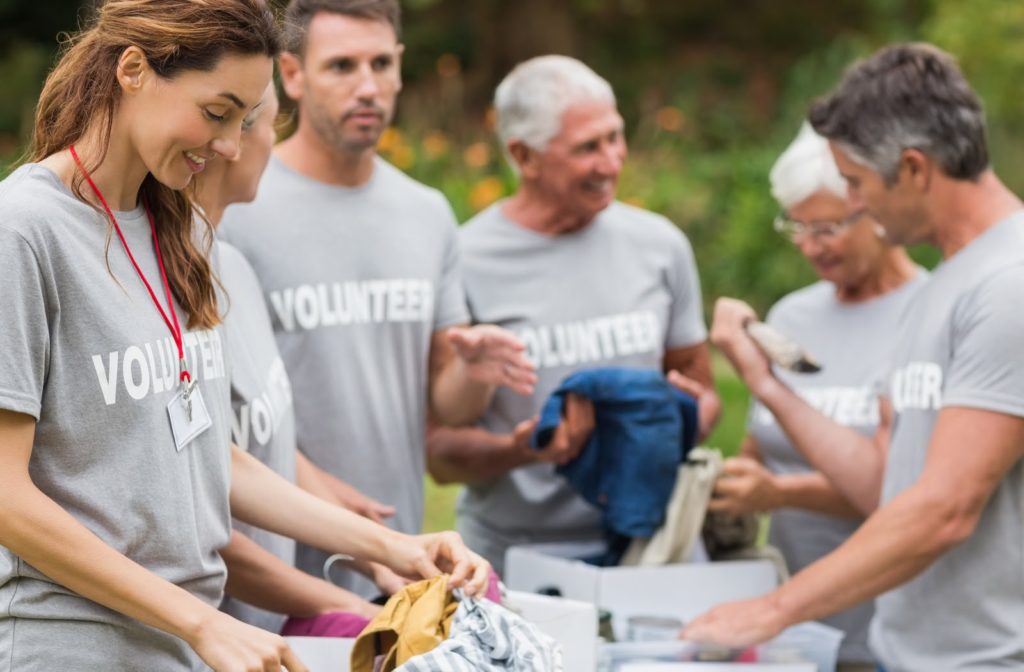
Volunteering not only bolsters the strength and effectiveness of your local community services, but can provide you with a great sense of self-fulfillment. Being a volunteer for a service, cause, or event that you believe in can put you into contact with people who share the same passion and sentiments as you, and can expand your network of empowered relationships. If you cannot provide your physical presence to a cause, you can lend your support through other avenues such as donating finances or goods.
What is Volunteering?
Volunteering is when a person willingly uses their time and labour to perform community service for no expected compensation. Volunteer positions can require a specific set of skills, or can require nothing more than a positive attitude and a willingness to help. Volunteers can be used to help provide medical services, emergency rescue/support, support to civil and social causes, and a massive variety of other areas of service.
The Importance of Volunteering
Helping Your Local Community
Your local community contains and provides the essential day-to-day services that you utilize to improve your quality of life. Something you may not realize is that even when you are not directly involved with the provision of these services, you are also an essential part of the systematic workings of your community. Making purchases and using services can help support small businesses and provide them with a sense of engagement with their customers. To take this further, community members can further strengthen their local community services by volunteering. By directly getting involved with community services through volunteering, you are helping to further improve the quality of life for others in your area. The process of volunteering will end up circling back to benefit you and will help you live a more quality, comfortable, and fulfilled life.
Protecting the Environment
Protecting the planet that we live on and use for resources can be a large part of community service. Helping your community cut down on waste and implement more eco-friendly systems through volunteering will keep the area you live in clean and beautiful. You can do a great deal of help through individual efforts to be more eco-conscious in your daily life, but volunteering for an organized environmental effort in your community will exponentially improve the quality of life in your area. Volunteering in any capacity to help the environment will help set up future generations for success and will ensure that the environment that they inherit can take care of their needs.
Gaining Experience and Making Connections
Volunteering is a great way to gain experience in a field or industry you are interested in. Typically, to be a volunteer you will not need the same experience or designated skills that a paid position requires. If you can get some experience through volunteering, it can help open up opportunities for paid work in the same industry or field.
You will also be able to meet many empowering people through volunteer opportunities and make worthwhile connections with them. Along with gaining experience, being able to network and connect with many different people can give you an advantage when looking for paid work.
Pros and Cons of Volunteering
Pros
Helps your local community in different service areas
Protects the environment
Make meaningful connections
Gain experience
Achieve a great sense of fulfillment
Expand your knowledge of certain industries, fields, and services
Learn how to work with a team
Bolster your resume
Improve and mature your character and personality
Chances to volunteer abroad
Cons
Can be time-consuming
No monetary compensation for your efforts
Volunteering abroad can be expensive
Finding the right volunteer position can take a lot of time and effort
Some volunteer positions require a large amount of commitment
Other Ways to Help Your Community
If you cannot provide help through volunteering physically, there are other options available to help your community.
Donating Goods
Donating goods is a fantastic way to help those who do not have the means to purchase necessary products and services receive the help they need. Donating food and clothing are two simple ways to stay active in community services without having to volunteer your time towards specific commitments.
Donating Financially
If you have the means, making a monetary donation can be another good way to provide people with the help they need. Donating money to different causes has never been easier due to the fact that many organizations accept donations through their websites.
The Great Canadian Giving Challenge

Dear Friends of Regeneration,
This June, we are asking you to join us in the Great Canadian Giving Challenge. From June 1- June 30, for every dollar you donate through Canada Helps, Regeneration will be entered in a contest to win $20,000 on Canada Day! The more you give, the more chances we have to win.
Over the past five months, Regeneration staff have been working alongside James, a Brampton resident with limited income, who has been struggling with late-stage leukemia. Regen has been supporting him by bringing him groceries as he goes through his treatments and prepares for the end of life. It’s generous contributions like yours which allow us to support people like James. Donate today and help us increase our impact in Brampton.
What To Know Before You Volunteer At A Homeless Shelter

Most of us want to make the world a better place, but many people don’t know where to begin. What’s more, we tend to assume that volunteer work will be much more complex and difficult than it usually is. In reality, volunteering at a homeless shelter can be an opportunity to have fun and develop valuable skills while assisting people in meaningful ways.
People usually hesitate to volunteer for one of several reasons: they assume they don’t have time, believe they lack the right skills, or have other preconceptions about what volunteering entails. Keep reading as we dispel those myths so that you can discover easy and effective ways to make a difference.
Any Skills You Have Can be Useful
Most shelters do more than simply give people experiencing homelessness a place to rest their heads, so there are usually many different volunteer positions available. At Regeneration Outreach, we welcome volunteers in the following areas:
Kitchen volunteers for our breakfast and lunch programs.
Clothing room volunteers who sort and dispense donation items.
Marketplace volunteers who organize and distribute food and other goods.
Volunteers for our thrift store to sort donations, price items, and perform floor work or cashier duties (proceeds go towards supporting our community initiatives).
Administrative volunteers to help us stay organized and serve our community efficiently.
Maintenance volunteers to help keep our facilities sanitary and accessible.
General volunteers who help deliver our everyday services to the people who need them most.
Before volunteering for an organization like ours, we recommend taking a moment to consider your skills and how they can serve the community most effectively. If you happen to have an eye for fashion, a flair for cooking, or a background in office work, your talents may be most helpful in particular areas.
Short on Time? No Problem
Many people don’t feel like they have time to make a long-term commitment to volunteering, and that’s perfectly all right. Most homeless shelters accept short-term and long-term volunteers.
Short-term volunteering is often an excellent way to volunteer for the first time so that you can gain some experience. You might even want to volunteer for a few short-term positions so that you can try them on for size and find out which area is most comfortable.
Once you’ve found your fit, becoming a long-term volunteer is an excellent way to develop your skills in a particular area and build meaningful relationships with the people who benefit from your help. Long-term volunteering can also help you develop strong connections to other volunteers, allowing you to coordinate and support the community more effectively.
Create Your Own Volunteering Opportunities
Volunteering doesn’t always mean coming to the shelter itself. In fact, many groups who volunteer for organizations like ours do so by creating their own events.
We’ve had various organizations volunteer for us in the past by setting up food and clothing drives at their own facilities. Many grassroots organizations have also set up fundraising events on our behalf by reaching out to our volunteer coordinator for planning advice and assistance. From church bake sales to charity walks and everything in between, we’re ready to help make your event as successful as possible.
Tips for Successful Volunteering
In order to help you help others, we’ve put together a quick list of things to remember for your first volunteer experience:
Wear appropriate clothing: kitchen or maintenance volunteers might be working with foods or liquids that can stain clothing, so you probably don’t want to wear anything delicate or expensive. Shoot for practical and comfortable attire that facilitates easy movement.
Expect the unexpected: we work with a wide variety of people who have distinct needs and challenges. If you plan on volunteering in a public-facing position, please remember to approach every interaction with patience and compassion, no matter how out of the ordinary it may seem.
Do some research before volunteering: the more you know about organizations like ours, the better you can prepare to support them. Take a moment to reach out to our coordinators and study our programs to have some idea of where you’ll be able to make the most significant difference.
Your Help Changes Lives
Finally, remember that anything you do to support homeless shelters makes an essential difference to countless people. If you can’t volunteer, consider making a donation or shopping at our thrift store to help fund our programs. Together, we can help ensure better experiences for people facing homelessness throughout our community.
Supporting A Place to Be, This Easter
Regeneration
1: an act or the process of regenerating : the state of being regenerated. 2: spiritual renewal or revival. 3: renewal or restoration of a body, bodily part, or biological system (such as a forest) after injury or as a normal process
Regeneration Outreach Community is exactly that. We are a community of people reaching out to those who in need, and in that process we are ALL renewed and restored.
“When you volunteer at Regeneration you have the opportunity to change a person’s life. And you might just find that your life has been changed as well.” Ted Brown
I heard this said over 7 years ago, and this statement resonated with me—it has never left me. Why? Because it is true. I graduated as a Social Service Worker and while I was so proud of my accomplishments and my new found ability to “help” my community; I found myself being helped more by the community I was serving. Now, to some this might sound “unhealthy”, but I mean this in the healthiest way. I found myself among a community of people who were honest, hurting, and in need of help. If we are all honest with ourselves, we have to admit we have been there, are there, or very easily could be there at any moment. There is something refreshing about being a part of this community.
Outreach
1: the extent or length of reaching out. “the loving outreach of God to the world”
“Greater love has no one than this that someone lay down his life for his friends.” John 15:13
Just as God gives us an example of His sacrificial love for us by giving up His life through Jesus Christ on the cross; in gratitude, we have the opportunity to partner with Him as we reach out to a hurting world extending that mercy and grace to others around us. “God demonstrates his own love for us in this: while we were still sinners, Christ died for us.” Romans 5:8 What a gift of dignity. God did not expect us to “clean ourselves up” before we could approach Him; instead, He showed us his overwhelming love by reaching out to us—even in our mess. As we reach out to those in need our goal as a community to serve with love and dignity—meeting a person where they are– no strings attached.
Community
1: a group of people living in the same place or having a particular characteristic in common. 2: a feeling of fellowship with others, a result of sharing common attitudes, interests, and goals.
Something beautiful is being built as we come together to support some of the most vulnerable in our community,—a sense of belonging for us all!
“So in Christ we, though many, form one body and each member belongs to all the others”. Romans 12:5
Our volunteers are an integral part of our community at Regeneration Outreach Community, The Marketplace, and Regen Thrift. Whether they are in the back, preparing food, cooking, packaging food, sorting clothes, pricing and cleaning; or working frontlines serving and greeting, they are making a difference in the lives around them. It is our prayer for our Volunteers that just as they are being a blessing to others; they would also be blessed in return.
If you need to be renewed, come join us! If you want to pay forward the love you have been given; come join us; and if you want to help us build something beautiful, come join us!
We look forward to serving with you!
Can Going to Church Improve Your Mental Health?

For many, mental health is an uphill battle filled with obstacles that can be difficult to avoid. Depression, anxiety, panic disorders, and many other mental illnesses are prominent issues in many communities, including our own Brampton. This blog explores the possibility of worship services being an aid for those with mental health issues.
How Mental Health Affects Us
In Canada, 1 in 5 people will personally experience a mental health problem in any given year. Unlike some physical ailments, mental health can affect anyone, regardless of age, income, education, or culture. Approximately 8% of adults will experience major depression at some point in their lives.
Although many are standing up to fight the stigma against mental health, there is still a huge barrier present to many that stand between them and the help they need. The stigma surrounding mental health can lead to discrimination that could prevent individuals from seeking a diagnosis and treatment that could potentially change their lives for the better.
According to the Canadian Mental Health Association, people with severe mental health conditions are disproportionately affected by homelessness. Overall, mental health is an ongoing problem for Canadians (and worldwide), and we continue to fight as a community every day.
Is Spirituality a Viable Resource?
The connection between religion and health is not a new conversation. Studies have been continually conducted over the years to explore the links between spirituality and its effect on physical and mental health.
In 2005, a survey conducted in Atlanta, Georgia, of nearly 37,000 men and women showed that people who regularly attended worship services were less likely to suffer from depression than those who don’t. Researcher Marilyn Baetz, MD, of the University of Saskatchewan, said, “The higher the worship frequency, the lower the odds of depression, mania, and panic disorders.”
A more recent study conducted in Ireland included more than 6,000 adults over the age of 50 to explore the effect of religion and spirituality on mental health. The study found that individuals who regularly attended religious services had fewer depressive symptoms than those who did not. This study’s results align with the 2005 Atlanta survey, which signals the importance of religious beliefs and mental health.
The author and lead of the Irish study hypothesized that the “later-in-life boost worship seems to bring can be attributed to the increased social and emotional support from one’s religious and social networks.” For many, active religious participation gives individuals the chance to combat the isolation felt from many factors, like living alone. The same study also found that social connectedness was one of the most important predictors of mental health and well-being in those studied.
In 2017, a study published in PLOS One found that attending regular worship services led to a reduction in the body’s stress responses as measured by cortisol levels, stress hormones, and immune function changes. The study team also found that more frequent churchgoers (more than once a week) had a 55% reduction in mortality compared to nonchurchgoers.
How Regeneration Can Help
At Regeneration, we believe spirituality plays a significant role in the emotional and mental ability needed to overcome, instill strength and conviction, and go forward in hope. Regardless of your story, we always aim to provide a community that welcomes everyone with open arms.
Although we practice Christian love in action through daily prayer services and fellowship meetings, we support all beliefs. If living in faith means something different to you, we will always respect that and provide guidance wherever necessary.
Mental health is an ongoing battle that many of us face every day. Finding something that works for you is crucial, and our compassionate staff is always here to help you do so. At Regeneration, you’ll find an on-site chaplain and many other team members and offer individual spiritual support at any time.
Together, we can make a difference. And that’s what we plan to do.
The Link Between Homelessness & Mental Health

More than 235,000 Canadians experience homelessness every year, and 1 in every 5 Canadians experiences mental illness. These social problems exist on a grand scale across Canada, but the relationship between them remains poorly understood by many.
Members of the general public commonly make unfair assumptions about people who experience homelessness, mental health challenges, or both. Examining the relationship between these conditions in greater detail is essential for promoting more compassionate and effective approaches to each of them.
Risk Factors for Homelessness and Mental Health Challenges
Anybody can experience homelessness or challenges to their mental health. However, statistics indicate that specific demographics are more likely to experience homelessness than others. Some of these demographics include:
Single adult men, who make up more than 47% of all unhoused people in Canada.
Women, who account for 27.3% of Canadians experiencing homelessness.
Youth between the ages of 13-24, who make up nearly 20% of Canadians without homes. Almost 30% of Canadian youth experiencing homelessness are LGBTQ2S.
Indigenous people, who make up 4.3% of Canada’s population but 28-34% of the people in homeless shelters.
Veterans also experience high rates of homelessness, accounting for 2.2% of shelter populations. The majority of veterans in homeless shelters are adult men.
Each demographic listed above is more likely to experience homelessness for different reasons. Women in Ontario, for example, are more likely than men to experience poverty due to the province’s wage gap, which can create housing insecurity. Women who experience homelessness are also frequently fleeing from intimate partner violence, which was cited as the reason for over 70% of shelter admissions in a 2010 study.
In unhoused Indigenous Canadians, intergenerational trauma due to colonialism contributes to poverty and the risk of facing racism, resulting in fewer economic and housing opportunities. Youth experiencing homelessness generally come from homes with family conflict, instability at home or school, poverty, or neglect. LGBTQ2S youth are particularly vulnerable since homophobia plays a role in many of these situations.
Among single adult males, mental health challenges are one of the most significant contributors to homelessness. However, it is vital to note that nearly all causes of homelessness outlined above stem from some form of trauma, which negatively affects a person’s mental health as well.
Homelessness & Mental Health: a Cyclical Relationship
Historically, a great deal of data has suggested that people experiencing mental health challenges are also more likely to experience homelessness. However, framing the issue in such a way obscures another critical consideration: that the trauma homelessness creates may lead to additional mental health challenges.
The result is a vicious cycle: for people struggling with existing mental illness, the stress of homelessness can make these challenges worse. Meanwhile, those who find themselves homeless for other reasons can experience new mental health obstacles due to their circumstances.
Not all people who experience homelessness have previously struggled with their mental health, but homelessness can create mental health challenges for anybody. Therefore, efforts to improve outcomes for people experiencing homelessness must also include comprehensive mental health resources.
Mental Health Resources for People Experiencing Homelessness
The province of Ontario provides a total of 260,000 social housing units. However, only 12,137 of these units have the capacity for community-based mental health support.
Many other organizations provide some form of support for people at the intersection of homelessness and mental illness. A list of such organizations can be found here, although it is by no means exhaustive.
Regeneration offers numerous programs designed to improve the quality of life for people experiencing homelessness. These programs include specific focuses on providing medical resources, opportunities for social engagement, and spiritual guidance, all of which can positively impact a person’s mental health.
Fighting Homelessness Means Fighting for Mental Health
Ending the stigma around mental illness and providing greater access to mental health resources is critical to reducing homelessness in Canada. Likewise, preventing homelessness and providing comprehensive support for individuals and families who experience it is one of the most important ways to improve mental health for Canadians.
Regeneration is always looking for caring individuals who want to become involved with our work. If you want to help us make a difference, connect with us today.