
More than 235,000 Canadians experience homelessness every year, and 1 in every 5 Canadians experiences mental illness. These social problems exist on a grand scale across Canada, but the relationship between them remains poorly understood by many.
Members of the general public commonly make unfair assumptions about people who experience homelessness, mental health challenges, or both. Examining the relationship between these conditions in greater detail is essential for promoting more compassionate and effective approaches to each of them.
Risk Factors for Homelessness and Mental Health Challenges
Anybody can experience homelessness or challenges to their mental health. However, statistics indicate that specific demographics are more likely to experience homelessness than others. Some of these demographics include:
- Single adult men, who make up more than 47% of all unhoused people in Canada.
- Women, who account for 27.3% of Canadians experiencing homelessness.
- Youth between the ages of 13-24, who make up nearly 20% of Canadians without homes. Almost 30% of Canadian youth experiencing homelessness are LGBTQ2S.
- Indigenous people, who make up 4.3% of Canada’s population but 28-34% of the people in homeless shelters.
- Veterans also experience high rates of homelessness, accounting for 2.2% of shelter populations. The majority of veterans in homeless shelters are adult men.
Each demographic listed above is more likely to experience homelessness for different reasons. Women in Ontario, for example, are more likely than men to experience poverty due to the province’s wage gap, which can create housing insecurity. Women who experience homelessness are also frequently fleeing from intimate partner violence, which was cited as the reason for over 70% of shelter admissions in a 2010 study.
In unhoused Indigenous Canadians, intergenerational trauma due to colonialism contributes to poverty and the risk of facing racism, resulting in fewer economic and housing opportunities. Youth experiencing homelessness generally come from homes with family conflict, instability at home or school, poverty, or neglect. LGBTQ2S youth are particularly vulnerable since homophobia plays a role in many of these situations.
Among single adult males, mental health challenges are one of the most significant contributors to homelessness. However, it is vital to note that nearly all causes of homelessness outlined above stem from some form of trauma, which negatively affects a person’s mental health as well.
Homelessness & Mental Health: a Cyclical Relationship
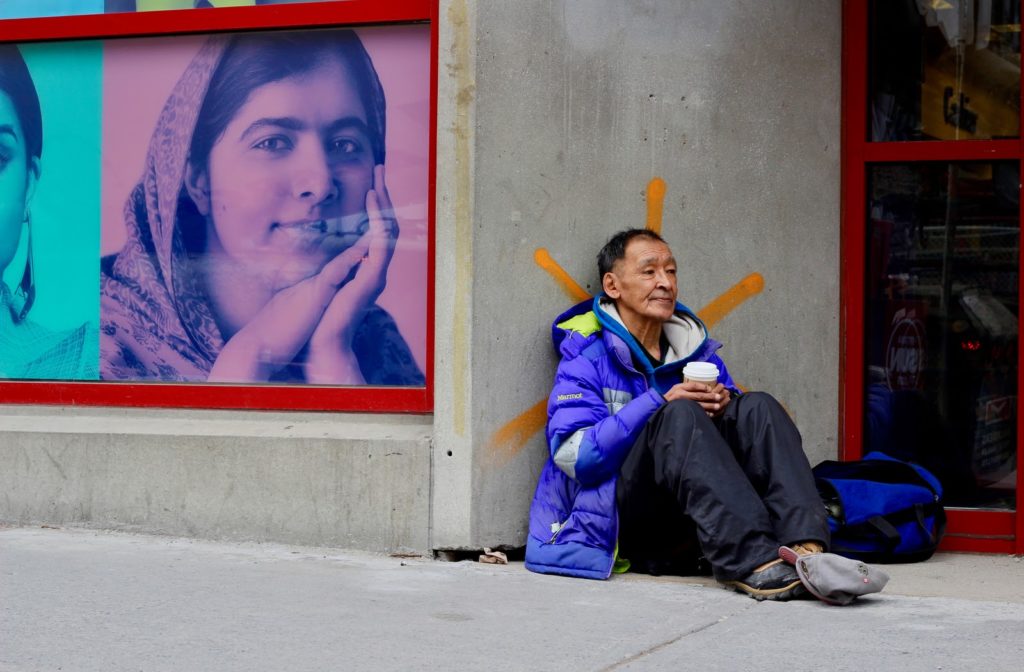
Historically, a great deal of data has suggested that people experiencing mental health challenges are also more likely to experience homelessness. However, framing the issue in such a way obscures another critical consideration: that the trauma homelessness creates may lead to additional mental health challenges.
The result is a vicious cycle: for people struggling with existing mental illness, the stress of homelessness can make these challenges worse. Meanwhile, those who find themselves homeless for other reasons can experience new mental health obstacles due to their circumstances.
Not all people who experience homelessness have previously struggled with their mental health, but homelessness can create mental health challenges for anybody. Therefore, efforts to improve outcomes for people experiencing homelessness must also include comprehensive mental health resources.
Mental Health Resources for People Experiencing Homelessness
The province of Ontario provides a total of 260,000 social housing units. However, only 12,137 of these units have the capacity for community-based mental health support.
Many other organizations provide some form of support for people at the intersection of homelessness and mental illness. A list of such organizations can be found here, although it is by no means exhaustive.
Regeneration offers numerous programs designed to improve the quality of life for people experiencing homelessness. These programs include specific focuses on providing medical resources, opportunities for social engagement, and spiritual guidance, all of which can positively impact a person’s mental health.
Fighting Homelessness Means Fighting for Mental Health
Ending the stigma around mental illness and providing greater access to mental health resources is critical to reducing homelessness in Canada. Likewise, preventing homelessness and providing comprehensive support for individuals and families who experience it is one of the most important ways to improve mental health for Canadians.
Regeneration is always looking for caring individuals who want to become involved with our work. If you want to help us make a difference, connect with us today.